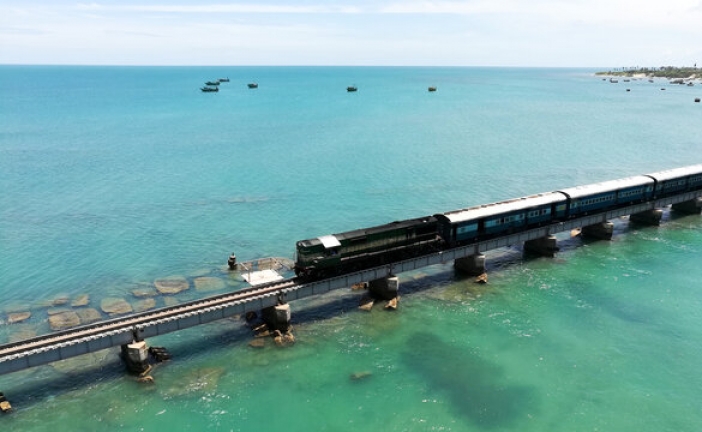
The Palk Strait is a narrow body of water that separates the southeastern coast of India from the northern coast of Sri Lanka. Stretching approximately 53-85 kilometers (33-53 miles) wide, the strait serves as a vital maritime corridor connecting the Bay of Bengal to the Gulf of Mannar and the Arabian Sea.
The Palk Strait holds significant geographical, ecological, and historical importance for both India and Sri Lanka. Its shallow waters and numerous coral reefs provide habitat for diverse marine life, including colorful fish, sea turtles, and various species of coral. The Gulf of Mannar Marine National Park, located within the strait, is renowned for its rich biodiversity and is recognized as a UNESCO Biosphere Reserve.
Historically, the Palk Strait has been a strategic waterway for maritime trade and cultural exchange between India and Sri Lanka. The ancient civilizations of the region, including the Chola, Pandya, and Sinhalese kingdoms, relied on the strait for transportation, commerce, and diplomatic relations. The maritime Silk Route, which connected the Indian subcontinent with Southeast Asia and beyond, passed through the Palk Strait, facilitating the exchange of goods, ideas, and cultures.
Today, the Palk Strait remains an important shipping route, serving as a conduit for trade between India and Sri Lanka and facilitating the movement of goods, cargo, and passengers. Fishing communities along the coast rely on the strait for their livelihoods, harvesting its bountiful waters for sustenance and economic opportunity.

LOCAL TIME IN COLOMBO, SRI LANKA
Welcome to Lanka Tour Master is a leading tour operator specializing in providing exceptional travel experiences in Sri Lanka.
© 2026 Lanka Tour Master All rights reserved.
Designed & Developed by Intryit (Pvt) Ltd.